


Choosing a spirit level comes down to three things: the length that suits the job, whether you need a magnetic base for metal work, and whether you need a digital angle reading on top of the bubble. Below you will see how to choose between the Futech models.
The spirit level is the most basic tool for checking level on any site, but choosing one is not as simple as it looks. The wrong length means awkward use in a tight space or poor accuracy over a long span. The wrong base means holding the tool with one hand when you should be working freely. Here is how to choose length and type for your work.
Futech covers this range with two main families, Spiritline (classic) and Spiritline M (magnetic), in lengths from 40 cm to 200 cm, plus a separate torpedo model for tight spots and digital versions with an angle reading.
Before you choose, think about what you really need, because the most expensive model is not always the best fit for your work.
What length of spirit level do you need
The length sets how much surface you check in one pass and how easily the tool fits the workspace:
- 25 cm (torpedo): pipework, tight spots, electrical and plumbing work where a longer level will not fit.
- 40–60 cm: furniture, door frames, small repairs, putting up shelves.
- 80–120 cm: masonry, door and window frames, drywall studs.
- 150–200 cm: large walls, floors, beams, checking level along a whole side of a room.
The general rule: the longer the level, the more reliable the reading over a large surface, because it bridges more distance in one pass instead of moving a short level again and again and adding error at every move.
Magnetic base: when you need it
Futech’s Spiritline M series has a built-in magnetic base, while the classic Spiritline series does not. Otherwise both share the same 0.5 mm/m accuracy and the same tough vials. The price difference at the same length covers exactly the cost of the built-in magnet.
A magnetic level makes sense when you work on steelwork, metal drywall profiles or steel frames: it sticks to the metal and leaves both hands free to screw or hold the piece in place. On wood, plaster or brick the magnet adds nothing, and the classic, cheaper series does exactly the same job.

Spiritline M120
SKU: 825.120Magnetic base for one-handed work on metal profiles and steelwork.
Accuracy and toughness on site
Spiritline levels state an accuracy of 0.5 mm/m: over one metre the deviation from true level or plumb is no more than half a millimetre. The vials resist impact and UV light, so they do not fade and do not break easily if the tool is dropped. The end caps are reinforced too, which matters in daily use on scaffolding or a barrow.
The ESD (electrostatic discharge) protection listed in the specifications means the tool safely discharges static electricity instead of building it up, useful when working near electrical installations or sensitive equipment.
Torpedo for tight spots
When a normal level will not fit, inside a duct, behind a pipe or in the corner of a cabinet, the Torpedoline M25 fills the gap. At 25 cm, with a magnetic base and the same 0.5 mm/m accuracy, it is the tool that stays in the bag for a quick check where nothing else fits.

Torpedoline M25
SKU: 845.025Compact and magnetic, for tight spaces where a longer level will not fit.
When a digital level is worth it
A classic spirit level tells you whether something is level, plumb or at 45°. A digital level adds an exact angle reading in degrees, useful when you need a specific slope and not just “straight”: ramps, stairs, roof pitch, mounting solar systems. Futech’s 120 cm Digital Level has a magnetic base and the same 0.5 mm/m accuracy as the classic models, and also shows the exact angle on the display.
If your work is mostly “level or plumb”, the classic level is quicker and cheaper. If you need to work to or record a specific slope, the digital one justifies the extra cost.

Digital Level 120cm - Magnetic
SKU: 855.120Magnetic, with a digital angle reading for jobs that need a specific slope, not just level or plumb.
One length is not enough for everything
In practice most crews do not keep just one level but a small set of lengths: a short one for quick checks and a long one for surfaces.
In the toolbag of a crew working on drywall, dry construction and metal profiles, a medium-length magnetic level (100–120 cm) is often the most used tool of the day: it sticks to the vertical profile, stays put while you screw, and needs no second hand to hold it. For a crew working mostly on plaster, brick or wood, the same length in the classic, non-magnetic series does the same job without paying for something you will not use.
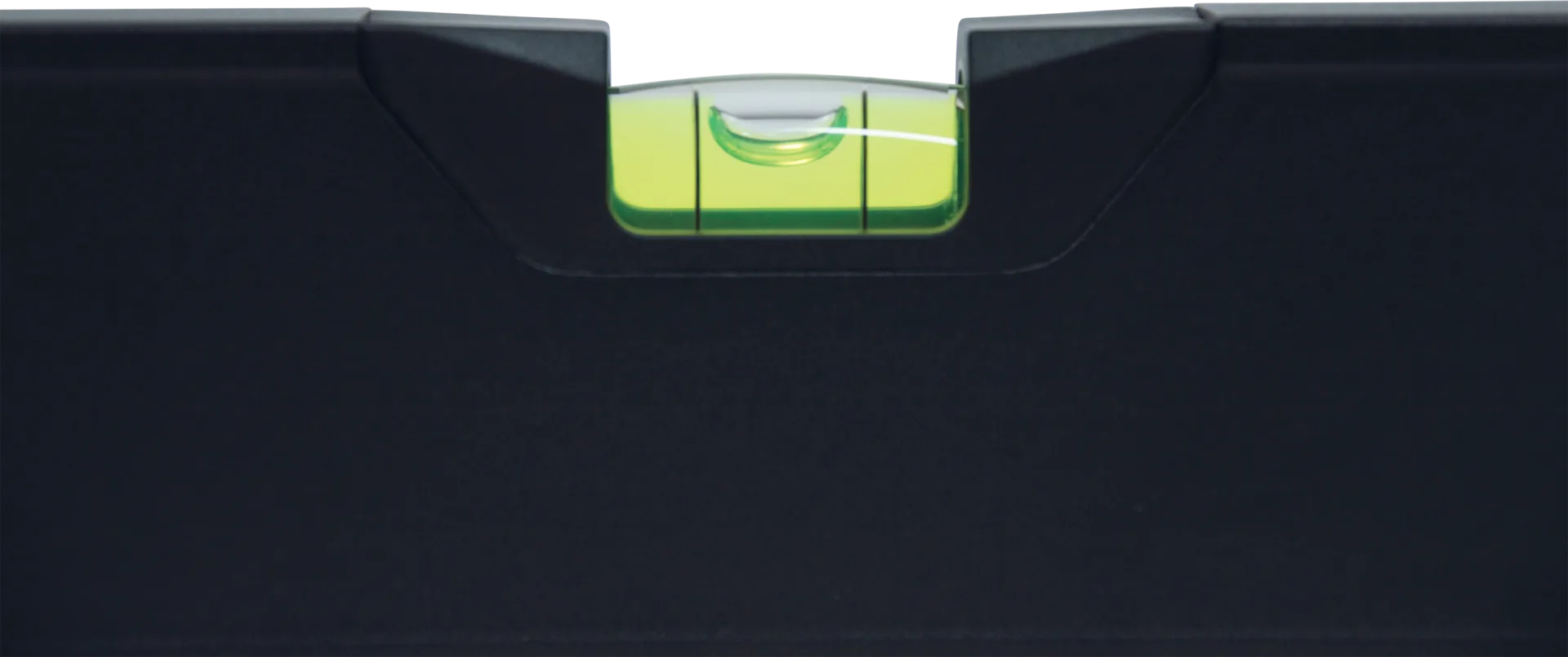
Spiritline: from 40 cm to 200 cm

What to check before you buy
- The magnet only helps on ferrous metal: it does not stick to aluminium, wood or plaster, so do not pay extra if you do not work with steel or galvanised profiles.
- The 0.5 mm/m accuracy is the same across the Spiritline series, magnetic or not: choosing a magnetic level does not give a better reading, only easier use.
- A longer level does not replace a short one: for tight spots you need a separate torpedo, however good your long level is.
- A digital level needs a battery: for daily work without depending on charging, the classic spirit level is still the more reliable first choice.
Conclusion
For most jobs, a Spiritline 120 cm covers masonry and frames, a 25 cm torpedo covers the tight spots, and those two are enough for daily work. Add a magnetic base only if you regularly work on metal, and a digital level only if you really need an exact angle and not just “straight”.
Frequently asked questions
What does an accuracy of “0.5 mm/m” on a spirit level mean?
Over each metre of length, the reference line of the level can deviate by up to half a millimetre from true level or plumb. For most building work this accuracy is enough.
When do I need a magnetic spirit level?
When you regularly work on ferrous metal: steel drywall profiles, steelwork, steel door frames. On wood, plaster or aluminium the magnet adds nothing, so it is not worth the extra cost.
What length of level do I need for masonry?
An 80–120 cm level covers most masonry, frame and drywall work. For whole walls or floors, a 150–200 cm level means fewer repositionings and less error added with each one.
Is a digital level worth it over a classic one?
Only if you need to set or record a specific angle, such as on ramps, stairs or roof pitch. For a simple level/plumb check, a classic bubble level is quicker, cheaper and does not depend on a battery.
What is ESD protection on a spirit level?
It means the tool safely discharges static electricity instead of building it up in its body, which is useful when working near electrical installations or sensitive electronic equipment.
Related Articles
DCK tools: why we chose them
There are countless tool brands on the market, and something new appears every day. When we decided to…
Emporas Tools: the Android app for beam clamp quantities
On a building site, efficiency is decided in the details. EMPORAS takes the next step by combining its…
Beam clamp with tie rod: how it works and how many you need
The beam clamp with tie rod locks the side panels of a beam form without cleats, nails or…